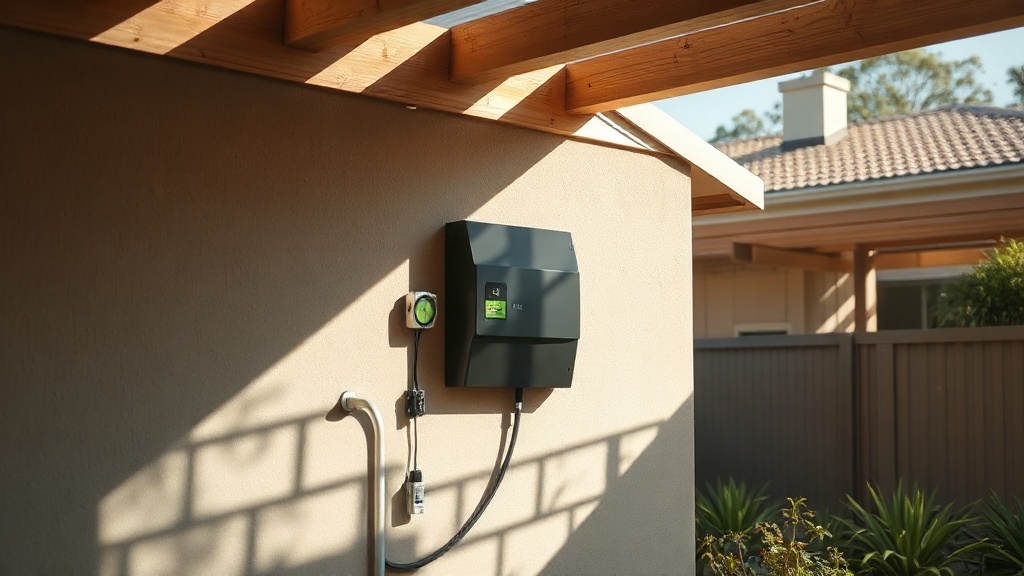
The rules: where a battery can and can’t go
Australian standard AS/NZS 5139 governs home battery placement. The practical effects: batteries can’t be installed in habitable rooms, ceiling spaces or under stairways/evacuation paths; they need clearances from doors, windows and appliances; wall-mounted units need a non-combustible barrier on certain wall types; and anything in a driveway or garage traffic path needs impact protection like a bollard. Your installer handles all of this – but it explains why the spot you imagined sometimes isn’t the spot you get.
Outside vs garage in SA heat
| Location | Verdict |
|---|---|
| Garage or carport | Best – stable temperature, no rain or sun, easy clearances |
| South or east external wall, shaded | Good – cool side of the house, fine for IP-rated units |
| West or north wall, full sun | Avoid – afternoon summer sun cooks performance and lifespan; some warranties carve out sustained extremes |
| Coastal exposure (salt air) | OK with the right enclosure rating – ask about corrosion-rated hardware near the coast |
Heat is the quiet battery killer. Lithium cells age fastest at sustained high temperature, and batteries also derate – deliver less power – when too hot. In a state that strings together 40-degree days, the difference between a baking west wall and a garage can be years of effective life. Most batteries manage heat actively, but they shouldn’t have to fight the install location all summer. More on lifespan: how long solar batteries last.
Questions to ask your installer
- What’s the battery’s operating temperature range, and does the warranty say anything about ambient heat?
- Can it go in the garage – and if not, which wall, and is it shaded at 4pm in January?
- Near the coast: is the enclosure corrosion-rated for salt air?
- Does the location meet AS/NZS 5139 clearances without expensive extras (barriers, bollards)?
Figures current as of June 2026. The SA Home Battery Scheme has closed. Source.
Get an install assessed for your home - free
Exclusive - your details go to one licensed local installer, not five.
Outdoor battery install FAQs
Are home batteries waterproof?
Outdoor-rated units (most current models) are sealed to IP55 or better – rain and dust are fine. Direct sun and heat are the real concerns, not weather.
Can a battery go inside the house?
Not in habitable rooms under AS/NZS 5139 – garages, dedicated plant areas and external walls are the compliant options. That rule is why “in the laundry” usually becomes “on the laundry’s external wall”.
Does the install location affect the rebates?
Not directly, but compliance does – the federal rebate requires installation to standard by an accredited installer, and a non-compliant location fails that test. A good installer simply won’t put it somewhere non-compliant.
Will SA summer heat damage my battery?
Quality LFP batteries are built for Australian conditions and manage temperature actively. But sustained direct sun on a west wall accelerates ageing and triggers derating on the hottest evenings – exactly when you want full power. Shade or a garage solves it.
Related: How long do batteries last? · How to choose an installer · What a battery costs